Results and Roadmap
Both choices helped the students participate, but they supported the group in different ways. Neither choice was completely perfect. A teacher may need to combine structure with discussion depending on the students’ needs.
Choice: Ask Guiding Questions
You joined the group and asked questions that encouraged each student to explain their ideas.
What Worked
The students discussed the problem in greater depth and listened to different perspectives. Sofia received help understanding the budget without feeling embarrassed, and Ethan explained his reasoning rather than simply making the decision.
What Could Improve
The teacher’s questions helped while the teacher was present, but Ethan might begin dominating the discussion again after the teacher leaves. The group may still need more structure to keep participation balanced.
Main strength: Deeper thinking and shared understanding
Main drawback: Participation may become unequal again
Choice: Assign Group Roles
You assigned Maya as the discussion leader, Ethan as the note-taker, Jordan as the budget checker, and Sofia as the reporter.
What Worked
The roles made participation more balanced and gave every student a clear responsibility. Ethan no longer controlled the entire activity, while Maya, Jordan, and Sofia had specific reasons to contribute. The group stayed organized and completed the budgeting task.
What Could Improve
The roles may have limited natural conversation. Some students focused mainly on their assigned jobs instead of discussing every part of the problem together.
Main strength: Structure and equal participation
Main drawback: Less flexible discussion
What Can We Learn?
The two choices show that teachers must consider both the academic task and the needs of the students. Assigning roles provides structure, while guiding questions encourage explanation and discussion. A stronger response might combine both strategies by assigning flexible roles and continuing to ask questions throughout the activity.
Current Roadmap
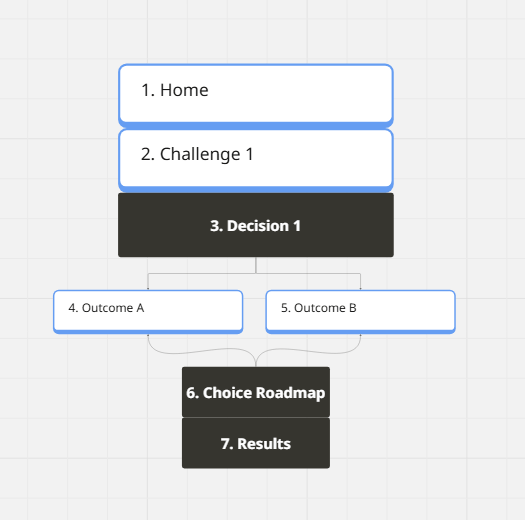
 Classroom Crossroads